Paper Trails #12: Lost & Found—The Strange Afterlives of Things Never Meant to Last
- andrea0568
- Nov 23, 2025
- 2 min read

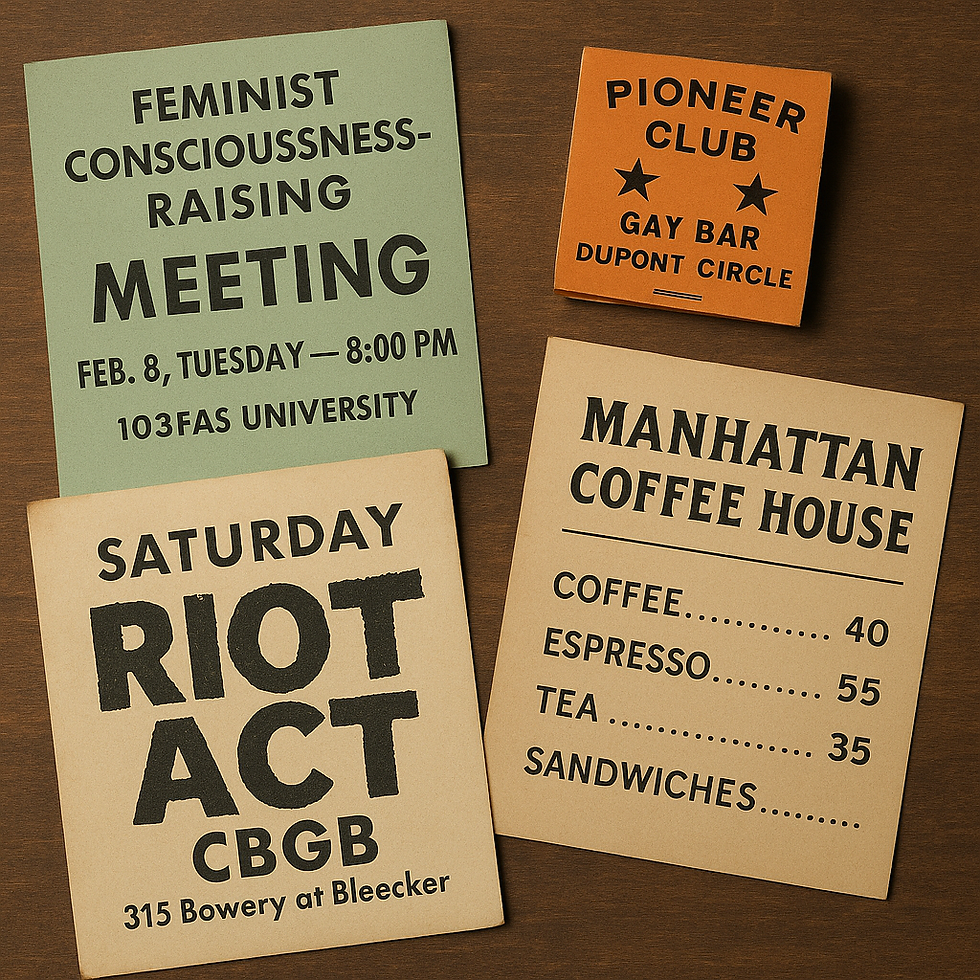
If you’ve spent any time digging through boxes of ephemera (and if you’re reading this blog, I’m assuming you’ve at least flirted with the habit), you know there’s always that one item. The piece that stops you cold. The one that makes you stare at it like it’s just whispered, “You have no idea what I’ve seen.”
A flimsy handbill for a 1972 feminist consciousness-raising meeting. A matchbook from a long-gone gay bar in Dupont Circle. A crumpled flyer for a punk show that definitely violated multiple fire codes. A menu from a coffeehouse where poets held court until closing, leaving behind rings of cold espresso and existential despair.
None of these were meant to last. They were meant to be pocketed, glanced at, ignored, or trashed. They were never meant to become artifacts. Yet here they are—surfacing decades later like tiny, papery time capsules that somehow dodged every disaster designed to kill them.
The Afterlife No One Planned For
The survival of ephemera is almost always an accident. An overstuffed drawer. A landlord who never cleaned out the attic. A bartender who shoved last night’s flyers in a cigar box and forgot about them for thirty years. A scrapbooker with a powerful sense of nostalgia and a mild hoarding impulse.
The universe conspires to destroy ephemera—sunlight, humidity, pests, careless hands—and yet, miraculously, some scraps refuse to die. They linger. They hide. They wait.
Until someone like me (or you) comes along and does the worst possible thing for our free time: we fall in love with them.
Why These Scraps Matter
It’s easy to dismiss these pieces as “junk.” But that junk is often the only surviving witness to entire subcultures, movements, and communities that slipped through the cracks of official history.
Most institutions didn’t save:
queer nightlife brochures
underground wellness newsletters
radical therapy flyers
local union announcements
or the DIY Xeroxed maps handed out at feminist festivals.
But those materials existed—and shaped real lives. And sometimes, by the grace of a forgotten box or a stubborn drawer, they still exist.
Ephemera is democracy on paper. It records the people who weren’t supposed to be recorded.
The Thrill of the Unexpected
What I love most is that ephemera rarely behaves. It doesn’t follow rules. It doesn’t announce itself politely. It shows up where it wants, when it wants, carrying stories that have been waiting decades for someone to ask the right question.
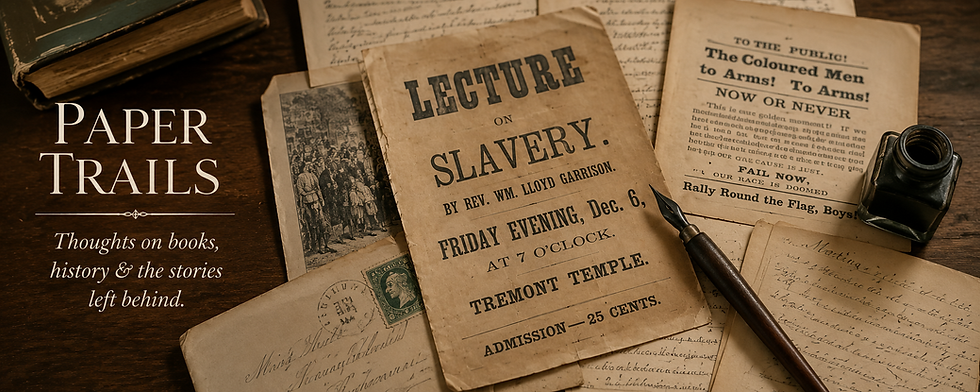
Sometimes you find a rare broadside tucked inside a cookbook. Sometimes a union flyer is folded inside a church bulletin. Sometimes you open a box labelled “office supplies” and find the entire social life of 1978.
Ephemera has chaotic good energy.
You never know what you’ll uncover—but whatever it is, it will always make you whisper, “How did this survive?”
And That’s the Magic
These pieces weren’t meant to endure. But they did. And because they did, we get to read them, preserve them, study them, argue over them, and sometimes—even build entire archives around them.
Their survival feels like a cosmic glitch, a loophole in the universe’s recycling policy.
But honestly? I’m grateful for every loophole.


the cigar box you found them in is also ephemera...meant to be thrown away. when the cigars were smoked. First used in the 1770s by US manufacturers there are millions of different boxes, I've collected them since 1952. www.cigarhistory.info