Post #5: “Margins of Memory: The Art of Annotated Books”
- andrea0568
- Oct 27, 2025
- 1 min read

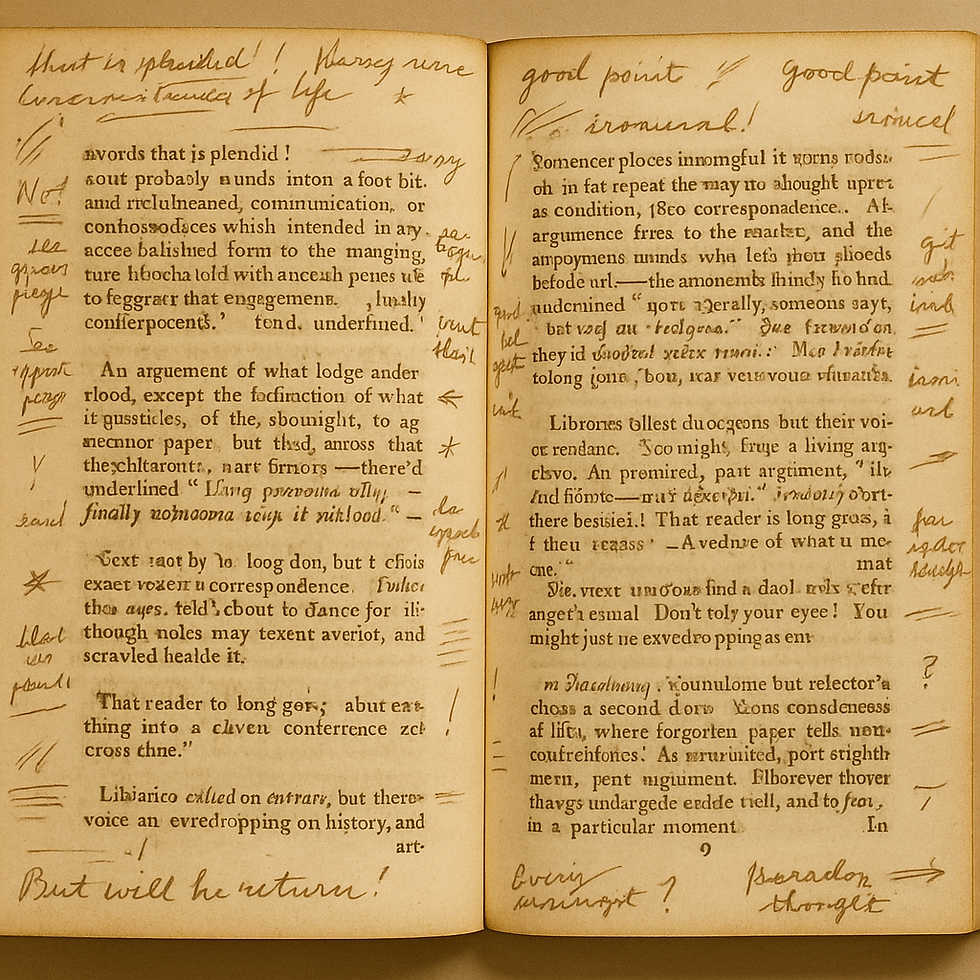
Most of us were told never to write in books. But the best readers—collectors, scholars, insomniacs with pens in hand—always do. Each underline, exclamation mark, and coffee-ringed note tells a second story, one the author never meant to publish.
Marginalia is the ephemera of thought: it turns reading into correspondence. I once found a copy of Langston Hughes’s The Big Sea filled with sharp pencil notes from the 1950s—part admiration, part argument. Whoever they were, they’d underlined “I am a Negro—and beautiful,” and scrawled beside it, finally someone says it out loud. That reader is long gone, but their voice remains, penciled between the lines.
Libraries collect authors, but collectors chase readers—the anonymous minds who left their ghosts in graphite. Every annotated volume is a duet between author and audience, an echo of what it meant to read, and to feel, in a particular moment.
So next time you find a book with a stranger’s scrawl, don’t roll your eyes. You might just be eavesdropping on history.


Comments